
How to Stop Your Dog From Pulling on the Leash
Transform stressful walks into enjoyable outings with proven techniques that actually work. Step-by-step methods from professional dog trainers.
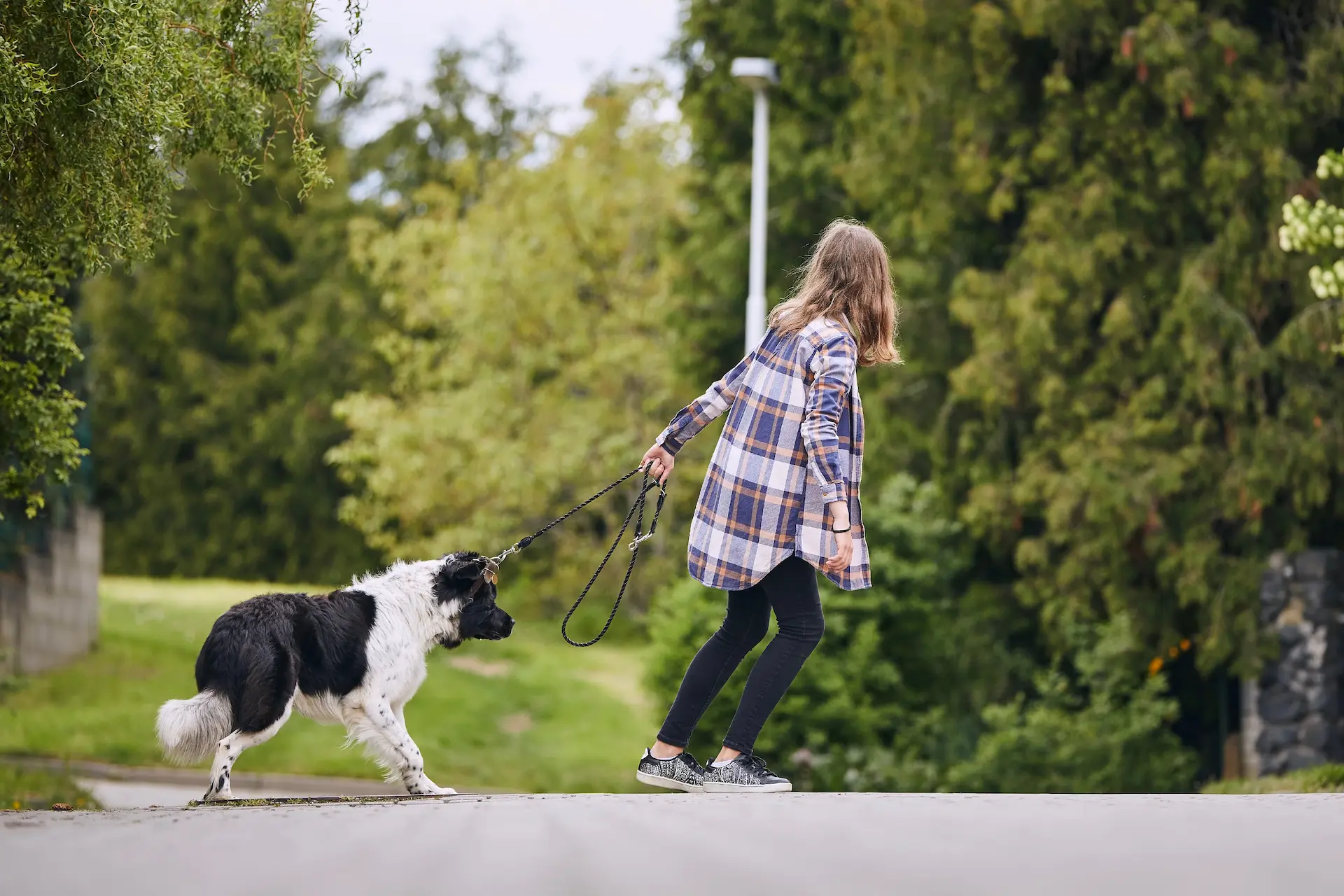
Does your arm feel like it's being ripped out of its socket every time you walk your dog? You're not alone. Leash pulling is one of the most common problems dog owners face, and it makes walks miserable for both you and your pup.
Here's the good news: with the right approach, any dog can learn to walk calmly on a loose leash. It doesn't matter if you have a 10-pound Chihuahua who thinks he's a sled dog or a 100-pound German Shepherd who wants to drag you down the street. The principles are the same.
In this guide, we'll show you exactly how to stop your dog from pulling on the leash using methods we've used successfully with hundreds of dogs across West Virginia. Whether you're in Tucker County, Preston County, or anywhere else in the Mountain State, these techniques will transform your walks.
The secret to loose leash walking isn't about strength or dominance—it's about teaching your dog that staying by your side is more rewarding than pulling ahead. With consistent training, most dogs show significant improvement within 2-3 weeks.
Why Dogs Pull on the Leash (It's Not What You Think)
Before we fix the problem, let's understand why it happens. Contrary to popular belief, your dog isn't pulling because they're trying to be "dominant" or "in charge." The real reasons are much simpler.
1. Dogs Are Naturally Faster Than Humans
Think about it: your dog's natural walking pace is much faster than yours. A dog's comfortable trotting speed is about 3-4 miles per hour, while humans walk at about 2.5-3 miles per hour. When your dog pulls, they're partly just moving at their natural speed.
Research from the Journal of Veterinary Behavior shows that dogs have a natural tendency to move ahead of their walking companions. This isn't about dominance—it's simply biomechanics. Dogs are built to move faster than we are.
2. Pulling Has Been Rewarded (By Accident)
Here's the biggest reason dogs pull: it works.
Every time your dog pulls and gets to move forward—even a little bit—they learn that pulling equals reward. They want to sniff that fire hydrant, and pulling got them there. They wanted to greet that other dog, and pulling made it happen.
This is called "self-reinforcing behavior." Your dog doesn't need you to give them a treat for pulling; the act of getting where they want to go IS the reward.
3. The Outside World Is Incredibly Exciting
Imagine if you could smell 10,000 times better than you currently can. Now imagine walking through a neighborhood filled with interesting scents from other animals, food, people, and countless other things. That's what your dog experiences on every walk.
According to research from the American Kennel Club, dogs have up to 300 million olfactory receptors in their noses, compared to about 6 million in humans. The part of a dog's brain devoted to analyzing smells is proportionally 40 times greater than ours. No wonder they want to rush ahead and explore!
4. Opposition Reflex
Dogs (and most animals) have a natural instinct called the "opposition reflex." When they feel pressure against their body, they instinctively push back against it. So when you pull on the leash, your dog's natural response is to pull harder in the opposite direction.
This is why yanking on the leash doesn't work and often makes pulling worse. You're actually triggering your dog's instinct to resist.
Understanding why your dog pulls is the first step to fixing it. Your dog isn't being bad or stubborn—they're just being a dog. Our job is to teach them that walking calmly beside us is more rewarding than pulling ahead.
Choosing the Right Equipment for Success
The right equipment won't train your dog for you, but it can make the training process much easier. Here's what you need—and what you should avoid.
The Essential: A 6-Foot Leash
A standard 6-foot leash made of leather or nylon is your best friend for training. This length gives your dog some freedom to move while keeping them close enough to communicate effectively.
- Leather leashes are durable, comfortable to hold, and improve with age
- Nylon leashes are affordable, come in many colors, and are easy to clean
- Biothane leashes combine the best of both—durable like leather, waterproof like nylon
Avoid retractable leashes! They actually teach your dog to pull because they provide constant tension. Plus, they offer little control in emergency situations. Save them for controlled environments after your dog has learned loose leash walking.
Collar vs. Harness: Which Is Better?
| Equipment | Best For | Pros | Cons |
|---|---|---|---|
| Flat Collar | Dogs who don't pull hard | Simple, holds ID tags, doesn't encourage pulling | Can put pressure on throat for strong pullers |
| Martingale Collar | Dogs with narrow heads (greyhounds, etc.) | Prevents escape, gentle tightening action | Not ideal for flat-faced breeds |
| Front-Clip Harness | Moderate pullers during training | Redirects pulling motion, reduces strain on neck | Can affect gait if used long-term |
| Back-Clip Harness | Small dogs, dogs with trachea issues | Comfortable, no neck pressure | Can encourage pulling (like a sled dog!) |
| Head Halter | Strong pullers who need extra management | Excellent control, redirects head gently | Requires conditioning, dogs may resist initially |
Our recommendation: For most dogs learning loose leash walking, start with a flat collar or front-clip harness. The front-clip harness is especially helpful for stronger pullers because it redirects their forward motion when they pull.
Training Treats and a Treat Pouch
You'll need high-value treats that your dog loves. For training, use small, soft treats that your dog can eat quickly—you don't want to wait while they crunch on a biscuit!
Good training treats include:
- Small pieces of cooked chicken or turkey
- String cheese cut into tiny bits
- Commercial soft training treats
- Hot dog pieces (cut small)
- Freeze-dried liver or meat
A treat pouch that clips to your waist keeps treats accessible so you can reward quickly. Timing is everything in dog training!
🛒 Not Sure What Equipment to Use?
Our trainers can assess your dog and recommend the perfect setup for your specific situation. Book a consultation and we'll get you started right!
View Training Options →Foundation Skills: Before You Hit the Streets
Before you tackle the chaos of outdoor walks, build your foundation skills in a low-distraction environment. This sets you and your dog up for success.
Skill #1: Attention on Command ("Watch Me" or "Look")
If your dog can't focus on you inside your house, they definitely won't focus on you when there's a squirrel across the street. Teaching a solid attention command is crucial.
How to Teach "Watch Me":
- Hold a treat near your face.
- When your dog makes eye contact, say "yes!" (or click) and give the treat.
- Repeat until your dog automatically looks at your face when you have a treat.
- Add the cue word "watch me" just before they look.
- Gradually phase out holding the treat near your face—reward from your pocket instead.
- Practice in increasingly distracting environments.
Make it a game! See how long your dog can hold eye contact. Start with just 1 second, then build to 5, 10, even 30 seconds. This impulse control will pay off big time on walks.
Skill #2: Name Recognition
Your dog should whip their head around when they hear their name, no matter what's happening. This gives you a way to interrupt pulling before it starts.
How to Build Strong Name Recognition:
- Say your dog's name in an upbeat tone.
- The instant they look at you, mark ("yes!") and treat.
- Practice randomly throughout the day—while they're relaxing, playing, eating.
- Never use their name for negative things (don't say "Buddy, NO!").
- Make their name predict wonderful things.
Skill #3: Leash Pressure Conditioning
Remember the opposition reflex we mentioned? We want to teach your dog that leash pressure means "come toward me," not "pull harder."
How to Condition Leash Pressure:
- Attach the leash to your dog's collar indoors.
- Apply very gentle pressure on the leash (don't pull hard!).
- The instant your dog moves toward you, release the pressure and reward.
- Repeat in different directions—forward, backward, left, right.
- Your dog should learn that leash pressure means "move this direction."
A study published in Applied Animal Behaviour Science found that dogs who were taught to yield to leash pressure showed significantly less pulling behavior during walks compared to dogs who only received verbal corrections. The physical understanding of what leash pressure means makes a huge difference.
Skill #4: Indoor Loose Leash Walking
Before you go outside, practice walking with your dog indoors where there are minimal distractions.
- Put your dog on leash inside your house.
- Hold treats in the hand closest to your dog.
- Take a few steps. If your dog stays by your side, mark and treat.
- If they pull ahead, stop and wait for them to look back at you.
- When they return to your side or create slack in the leash, mark and reward.
- Gradually walk longer distances before rewarding.
Once your dog can walk nicely through your entire house, move to your backyard, then your driveway, then the sidewalk in front of your house. Progress slowly!
5 Proven Methods to Stop Leash Pulling
Now for the main event: the training techniques that actually work. We recommend combining several of these methods for the best results.
1 The Stop-and-Wait Method
This is the foundation of loose leash training. The rule is simple: when the leash is tight, we don't move forward.
How It Works:
- Start walking with your dog.
- The instant your dog pulls and the leash becomes tight, stop completely. Become a tree.
- Wait silently. Don't pull back, don't say anything.
- When your dog looks back at you OR creates any slack in the leash, mark ("yes!") and reward.
- Take a few more steps and repeat.
Why it works: Your dog learns that pulling = no forward movement, while a loose leash = they get to keep walking. Remember, forward movement is what they want!
2 The Direction Change Method
This technique teaches your dog to pay attention to where you're going, not where they want to go.
How It Works:
- Walk with your dog. When they start pulling ahead, immediately turn and walk the opposite direction.
- Don't yank the leash—just turn and go. Your dog will feel the change in direction.
- When they catch up to your side, mark and reward generously.
- Continue walking. If they pull again, turn again.
- Eventually, your dog will start watching you to see where you're going.
Why it works: Your dog learns that pulling doesn't get them where they want to go AND that paying attention to you is rewarding.
3 The "Be a Tree" Method (For Reactive Moments)
When your dog sees something exciting and suddenly lunges, this technique prevents them from being rewarded for the behavior.
How It Works:
- When your dog lunges or pulls suddenly toward something, plant your feet and hold the leash firmly against your body.
- Don't pull back—just hold your position like a sturdy tree.
- Look away from what your dog is reacting to (this models calm behavior).
- Wait for ANY sign of relaxation: a look back at you, a sit, a loose muscle.
- Mark and reward that calm moment, then redirect and move away from the trigger.
4 The "Reward Zone" Method
This positive approach makes staying by your side the most rewarding place to be.
How It Works:
- Designate a "reward zone" at your side (usually your left side, but either works).
- Whenever your dog is in this zone with a loose leash, rain down treats!
- Start with rewards every few steps, then gradually space them out.
- Your dog will start gravitating to the reward zone because that's where good things happen.
- Add a cue like "heel" or "with me" when they're in position.
Why it works: Instead of just punishing pulling (by stopping), this method actively rewards the behavior you want. Dogs learn faster when they know what TO do, not just what NOT to do.
5 The "Penalty Yards" Method
This technique is especially effective for dogs who pull toward specific targets (other dogs, people, smells).
How It Works:
- When your dog pulls toward something they want, stop.
- Instead of just waiting, walk backward several steps, bringing your dog with you.
- This creates more distance from what they wanted (the "penalty").
- When your dog is calm and the leash is loose, try approaching again.
- If they pull, more penalty yards. If they stay calm, they get to reach the target.
Why it works: Your dog learns that pulling actually takes them FURTHER from what they want, while calm walking gets them closer.
🎯 Want Faster Results?
Our professional trainers in Taylor County, Marion County, and throughout West Virginia can accelerate your dog's progress with hands-on guidance!
Explore Training Programs →The Complete Week-by-Week Training Plan
Ready to put it all together? Here's your step-by-step plan for teaching loose leash walking over the next three weeks.
WEEK 1 Foundation and Indoor Practice
Days 1-2: Attention Training
- Practice "watch me" indoors, 5-10 reps, 3-4 times daily
- Work on name recognition throughout the day
- No formal leash training yet—just build focus
Days 3-4: Leash Pressure Conditioning
- Continue attention exercises
- Add leash pressure conditioning indoors (10-15 reps, 2-3 sessions)
- Practice yielding to light pressure in all directions
Days 5-7: Indoor Walking
- Practice loose leash walking inside your home
- Reward generously for staying by your side
- Use stop-and-wait when your dog pulls ahead
- Keep sessions short (5 minutes) and positive
- Aim for walking through your entire home with minimal pulling by end of week
WEEK 2 Controlled Outdoor Practice
Days 8-10: Backyard and Driveway
- Move training to your backyard or driveway
- Start with attention exercises in this new environment
- Practice short walking sessions (3-5 minutes)
- Expect more pulling—more distractions mean more challenges
- Use stop-and-wait and direction changes consistently
- End sessions before your dog gets tired or frustrated
Days 11-14: Front Yard and Quiet Streets
- Graduate to the front yard and the sidewalk immediately in front of your house
- Walk during low-traffic times (early morning or late evening)
- Keep walks short—quality over quantity
- Heavily reward good behavior in the "reward zone"
- Be patient! This is where most dogs struggle most
The 80% Rule: Only increase difficulty when your dog succeeds 80% of the time at the current level. If they're pulling constantly on quiet streets, they're not ready for busier areas yet.
WEEK 3 Real-World Application
Days 15-17: Gradually Increase Distractions
- Walk in slightly busier areas
- Practice near (but not too close to) other dogs, people, and distractions
- Use "watch me" to redirect attention away from triggers
- Continue all methods: stop-and-wait, direction changes, penalty yards
- Gradually extend walk duration (10-15 minutes)
Days 18-21: Building Reliability
- Challenge your dog with new environments: pet store parking lots, parks, downtown areas
- Start fading treat frequency (but keep them unpredictable!)
- Practice "real life rewards"—let calm walking earn sniff breaks and greeting people
- Aim for 70-80% loose leash walking by end of week
After Week 3: Continue daily practice and gradually increase challenges. Full reliability typically takes 2-3 months of consistent work. Don't give up—every week gets easier!
Common Mistakes That Make Pulling Worse
Even well-meaning dog owners sometimes accidentally reinforce pulling. Here are the biggest mistakes to avoid.
Mistake #1: Inconsistency – Sometimes allowing pulling (because you're in a hurry) and sometimes not. Your dog can't learn the rules if they keep changing.
Be 100% consistent, especially in the early weeks. If you can't train during a walk, use a front-clip harness or head halter to manage the behavior without teaching the wrong lesson.
Mistake #2: Pulling Back on the Leash – When your dog pulls, you pull back. This triggers the opposition reflex and often creates a tug-of-war.
Instead of pulling back, simply stop moving forward. Or turn and walk the other direction. Let the consequences teach the lesson.
Mistake #3: Using a Retractable Leash – These leashes have constant tension, teaching your dog that pulling is normal.
Switch to a standard 6-foot leash for all training. Save retractable leashes for after your dog has mastered loose leash walking (if you use them at all).
Mistake #4: Starting in High-Distraction Environments – Taking your untrained dog to the busy park and expecting them to walk nicely. That's like asking a kindergartner to take a college exam.
Start in the lowest-distraction environment possible (inside your home) and gradually increase difficulty. Set your dog up for success!
Mistake #5: Not Rewarding Enough – Expecting your dog to walk nicely just because they should. Dogs need motivation!
In the early stages, reward heavily and frequently—every few steps when your dog is in position. You can fade rewards later, but be generous now.
Mistake #6: Getting Frustrated or Angry – Yelling at your dog or jerking the leash when they pull. This damages your relationship and often increases anxiety-related pulling.
Stay calm and patient. If you're getting frustrated, end the session and try again later. Training should be fun for both of you!
Special Situations: Reactivity, Distractions, and More
Sometimes pulling is more than just excitement—it's a sign of deeper issues that need specific approaches.
Leash Reactivity: Pulling Toward Other Dogs or People
If your dog lunges, barks, or goes crazy when they see other dogs or people, you're dealing with leash reactivity. This requires more than standard loose leash training.
Research from the University of Pennsylvania School of Veterinary Medicine shows that leash reactivity is often rooted in frustration (the dog wants to greet but can't) or fear (the dog feels trapped and defensive). Understanding the root cause helps determine the right approach.
Tips for Leash Reactive Dogs:
- Increase distance. Find the distance at which your dog notices the trigger but can still respond to you. This is your "working distance."
- Reward calm behavior. When your dog sees the trigger but remains calm, treat heavily.
- Practice "watch me" to redirect attention before your dog reacts.
- Use management tools like head halters or front-clip harnesses for extra control.
- Consider professional help. Severe reactivity benefits greatly from working with a trainer who specializes in behavior modification. Our behavior modification program addresses these issues specifically.
Pulling Toward Squirrels, Rabbits, and Other Prey
Dogs with high prey drive can be especially challenging. They're not being naughty—they're following millions of years of instinct.
Strategies for Prey-Driven Dogs:
- Build a strong "leave it" command before you encounter squirrels.
- Reward heavily for checking in with you when wildlife is present.
- Use the penalty yards method—pulling toward prey makes them go further away.
- Consider a long line in safe areas so your dog can explore without practicing pulling on a short leash.
- Provide appropriate outlets for prey drive through games like fetch, flirt poles, and nose work.
Sniffing: Friend or Foe?
Your dog wants to sniff everything, and you want to actually get somewhere. How do you balance this?
Good news: sniffing is healthy mental enrichment for dogs. You don't have to eliminate it—just control it.
How to Handle Sniffing:
- Use sniff breaks as rewards. When your dog has walked nicely for a bit, say "go sniff!" and let them explore.
- Set clear boundaries. Sniff time happens when YOU say, not when your dog pulls toward something interesting.
- Teach a "let's go" cue to end sniff breaks and continue walking.
- Consider "decompression walks" on a long line in safe areas where sniffing is the whole point.
😰 Dealing With a Challenging Puller?
Some dogs need more intensive help. Our board and train program provides immersive training that can transform even the most determined pullers!
📞 Call (304) 244-2468Maintaining Good Leash Manners for Life
Congratulations—your dog is walking nicely! Now, how do you keep it that way?
Fading Treats (The Right Way)
You don't want to carry treats forever, and you don't have to. But fade them gradually and strategically.
- Variable schedule: Instead of treating every few steps, randomize. Sometimes reward after 5 steps, sometimes after 20, sometimes after 50.
- Intermittent reinforcement: Keep your dog guessing. This actually strengthens the behavior (think slot machines!).
- Life rewards: Use real-life rewards like sniff breaks, greeting friends, or going to favorite places as reinforcement.
- Jackpots: Occasionally surprise your dog with a "jackpot" of multiple treats for exceptional behavior.
- Never fully eliminate: Occasional random treats throughout your dog's life will maintain the behavior long-term.
Refresher Training
Even well-trained dogs can get sloppy over time. Schedule regular "refresher sessions" to keep skills sharp.
- Once a week, do a focused training walk where you actively reward good behavior.
- If you notice pulling creeping back, address it immediately—don't let bad habits rebuild.
- When entering new environments (vacations, new neighborhood), expect to need more training support.
What to Do When Things Slip
Life happens. You get busy, training gets inconsistent, and suddenly your dog is pulling again. Here's what to do:
- Don't panic or blame yourself. Every dog owner goes through this.
- Go back to basics. Return to shorter walks in lower-distraction areas.
- Increase your reward rate temporarily.
- Be extra consistent for 2-3 weeks until the behavior is back on track.
- If needed, seek help. A few sessions with a professional can quickly get you back on track.
Professional Leash Training Across West Virginia
Expert help for loose leash walking and all your training needs throughout:
Frequently Asked Questions About Leash Pulling
Why does my dog pull on the leash?
Dogs pull on the leash primarily because they're excited and want to explore, and because pulling has worked for them in the past. Dogs move faster than humans naturally, and when they pull and get to move forward, they learn that pulling equals reward. It's a self-reinforcing behavior that requires consistent training to change.
How long does it take to train a dog to stop pulling?
Most dogs show significant improvement within 2-4 weeks of consistent training. However, completely reliable loose leash walking typically takes 2-3 months of daily practice. The timeline depends on your dog's age, how long they've been pulling, and how consistent you are with training.
What is the best leash for a dog that pulls?
A standard 6-foot leash made of leather or nylon works best for training. Front-clip harnesses can help manage pulling while you train. Avoid retractable leashes as they actually teach dogs to pull. For strong pullers, a head halter like the Gentle Leader can provide additional control during the training process.
Should I use a prong collar or choke chain to stop pulling?
These tools should only be used under the guidance of a professional trainer who can ensure proper fit and technique. When used incorrectly, they can cause injury and increase fear or aggression. Many dogs can learn loose leash walking with positive reinforcement methods alone. Consult a professional trainer to determine the best approach for your specific dog.
Why does my dog only pull at the beginning of walks?
Dogs often pull most at the start of walks because they have pent-up energy and excitement. The anticipation of the walk creates arousal that makes it hard for them to control themselves. This is why starting walks with a calm routine and doing some training exercises before heading out can help tremendously.
Can older dogs learn to stop pulling on the leash?
Absolutely! While puppies may learn faster, dogs of any age can learn loose leash walking. Older dogs may have more ingrained habits, so it might take a bit longer, but with patience and consistency, even senior dogs can become pleasant walking companions.
Is it okay to let my dog sniff during walks?
Yes! Sniffing is important mental enrichment for dogs. The key is teaching your dog to ask permission first by maintaining a loose leash. You can use sniff breaks as rewards during training. Say "go sniff" and let them explore, then use a cue word to continue walking.
My dog pulls toward other dogs and people. What should I do?
This is called leash reactivity and requires specific training approaches. Start by increasing distance from triggers and rewarding your dog for calm behavior. Work on the "watch me" command to redirect attention. For severe cases, consult a professional trainer who specializes in reactivity. Our behavior modification program addresses these issues specifically.
Our Training Programs
🐾 Ready to Enjoy Walks Again?
Whether you need basic leash manners or help with more challenging behaviors, our team is here for you. Check out our puppy training or therapy dog programs for comprehensive training solutions!
🎉 View Training Packages